Our friends at the Rocky Mountain Harvard University Club have invited us to the Fiske Planetarium on Sunday, October 11, 2026 for a film, a lecture and a tour of the Sommers-Bausch Observatory. Check out the details below and purchase your $15 tickets HERE on the CYA website.
Note: This is not a CYA event
Location: CU Fiske Planetarium, 2414 Regent Dr, Boulder, CO 80309
Film and Lecture at 6:15 pm MT (doors open at 5:45 pm)
Featuring: Dr. Jason Dexter with Fiske full-dome movie Cosmic Mashup
Followed by: Viewing at the Sommers-Bausch Observatory
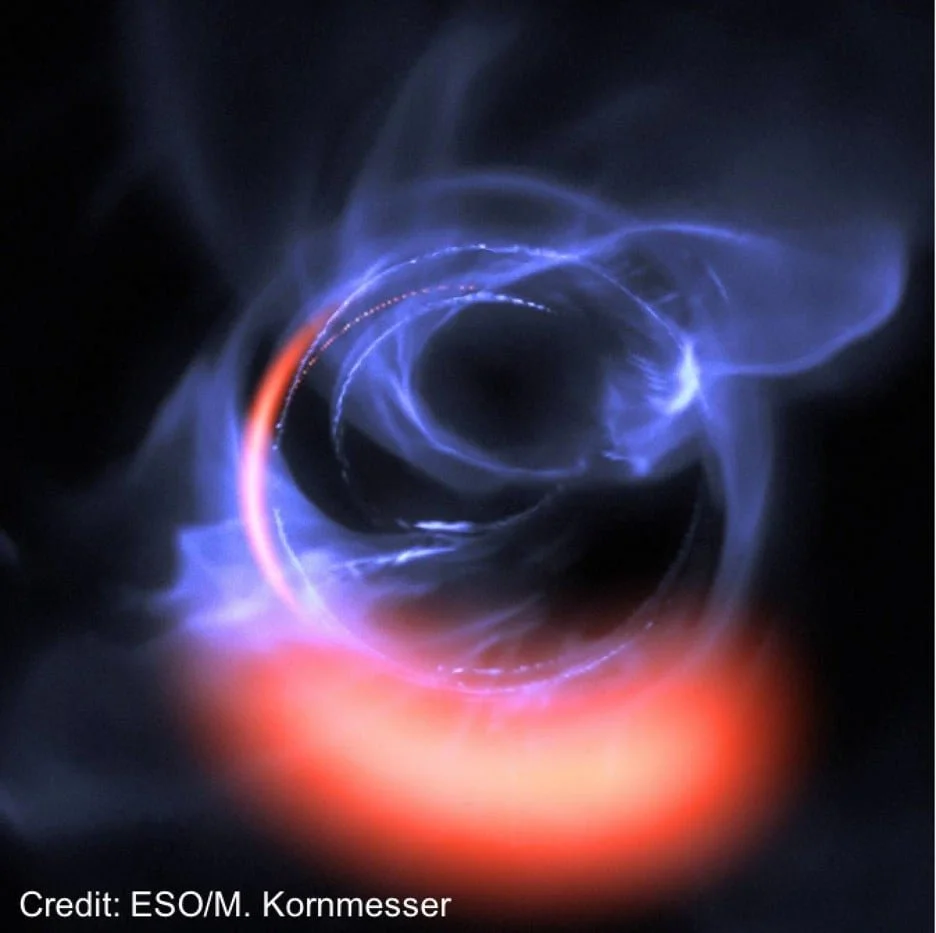
Black holes sit at the centers of galaxies and the edges of our imagination. Popular in public parlance as vacuum-cleaner monsters sucking in surrounding matter, elaborately modeled and extravagantly speculated about, black holes are presented as both possible denizens in the infancy of our universe and possible end states in its terminus.
As primordial black holes winking into existence in the period surrounding the Big Bang, as shapers of galaxy formation and regulators of star formation, and as end-stage repositories for the universe’s mass that gradually leaks away into entropy’s near-nothingness, visions of black holes provide out-sized fodder for our seemingly insatiable drive to understand this place we call home.
What do we actually know about black holes? Join us on Sunday, October 11 at 6:15 at the Fiske Planetarium on the Boulder CU campus for a double header (binary star?) event to probe one of our favorite mysteries. First, we will see the dramatic, highly visual, made-for-the-dome movie Cosmic Mashup: Gravity, Galaxies & Supermassive Black Holes. This film, produced by Fiske with oversight from the CU Astrophysical and Planetary Sciences Department, explores, among other things, the merging of galaxies and the production of supermassive black holes.
After the film CU astrophysicist Jason Dexter will join us to provide recent research, imagery and insight on black holes and their formation. Dr. Dexter studies the black hole accretion process: how matter dances on the periphery of black holes in accretion disks, how it slips across the event horizon and how black holes grow.
Following the presentation, we are thrilled to offer an all-generation visit to the Sommers-Bausch Observatory (SBO), located directly behind Fiske Planetarium. SBO was built in 1953 and housed in CU's first on campus observatory. Part of CU's Astrophysical and Planetary Sciences Department – like the Planetarium itself -- SBO has 3 large telescopes with apertures of 24", 18", and 16", all of which are regularly used for undergraduate research projects. The primary research telescope is the 24", housed in the observatory dome while the 16" & 18" scopes are primarily used for general public viewing.
Dr. Jason Dexter - Short Biography:
Jason Dexter received his PhD from the University of Washington in 2011 and was a postdoctoral fellow at UC Berkeley and a junior research group leader at the Max Planck Institute for Extraterrestrial Physics before joining the faculty at CU Boulder in 2019. His research group uses computational and analytic models to study how black holes grow by accreting from infalling gas and making predictions for how these systems should appear in astronomical observations. He has worked in particular on the Event Horizon Telescope and GRAVITY experiments which make spatially resolved observations close to black hole event horizons.
This event, organized by the Rocky Mountain Harvard University Club, is open to all alumni of the Colorado Ivy+ network, their friends, and their families.